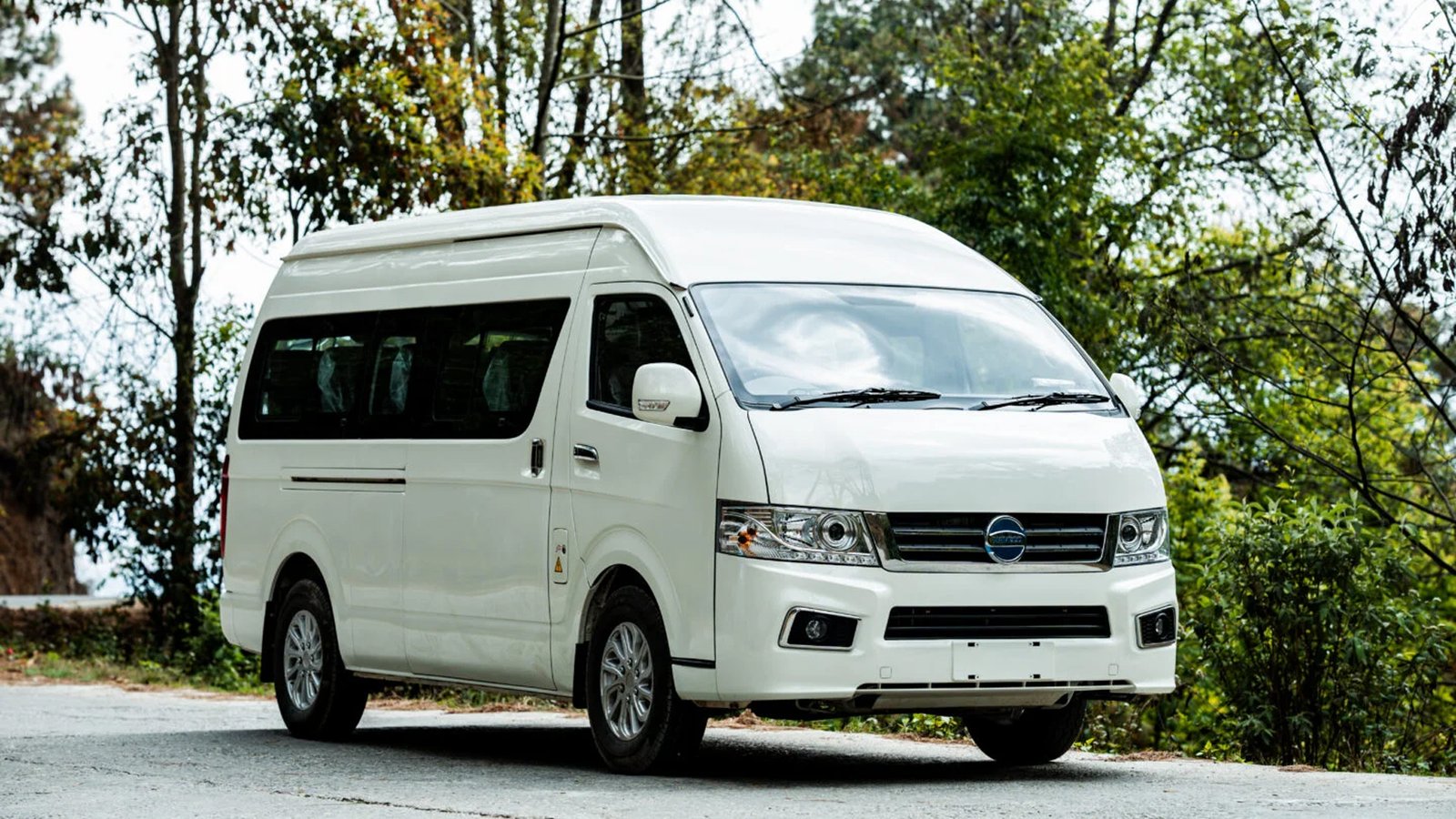
The NAVECO IVNV6550EV16W is a 16-seat electric van sold in Nepal by HAMs Motors at Rs. 80,99,000, with a claimed range of 380 km on the NEDC cycle. It runs on a 77.28 kWh CATL battery and a permanent magnet synchronous motor rated at 60 kW, peaking at 120 kW. The dealer backs it with a warranty of 8 years or 4,00,000 km.
NAVECO stands for Nanjing Iveco Automobile Co Ltd, a joint venture founded in 1996 in Nanjing, China, by Nanjing Automobile and Iveco. It began by building a version of the Iveco Daily for the Chinese market and now produces under the IVECO and Yuejin brands.
In Nepal, vans seating 14 to 16 people are the backbone of micro bus routes, school bus, hotel shuttles and tour fleets. Favourable policy, reduced import duties and strong hydropower are pushing operators toward electric, although charging outside the big cities is still thin. Every figure below comes from the dealer’s published specification sheet unless we say otherwise.
Overall Design
The NAVECO 16-seater is a long, tall, box-shaped van built to maximise cabin space rather than to chase style. It measures 5,440 mm long, 1,880 mm wide and 2,285 mm tall, on a 3,110 mm wheelbase. That puts it in the same size class as the minibuses already running on Nepali routes. The proportions favour passengers. The wheelbase is about 57 percent of the overall length, so the seats sit mostly between the axles and the overhangs stay short. At 2,285 mm, the roof gives adults headroom, but check that height against parking structures and low gates before you buy.
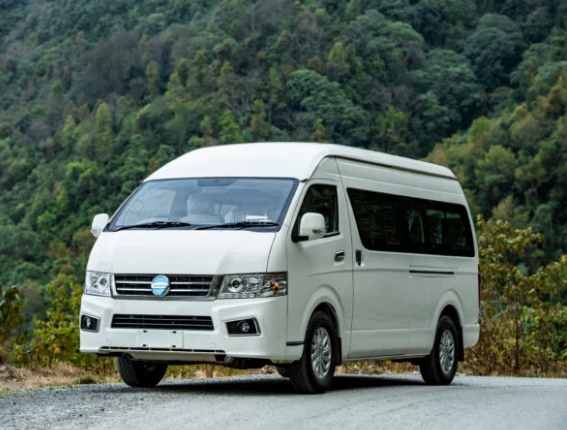
The model code places it in the NAVECO electric range at HAMs Motors, beside a 14-seat sibling, the IVNV6551EV14. According to the dealer’s listing, the 16-seater carries the bigger battery: 77.28 kWh against 53.58 kWh. In short, this is a practical workhorse with a clear job. It moves 16 people, keeps running costs low, and removes the engine noise and exhaust fumes of a diesel minibus.
Exterior
The exterior is that of a working passenger van: tall, slab-sided and sized for people first. Its 1,880 mm width keeps it inside the footprint of a normal road lane. The tyres say the most about its intended duty. The van rolls on 215/75R16LT rubber. The 215 is the tread width in millimetres, the 75 means the sidewall is 75 percent of that width, and the 16 is the rim diameter in inches. That gives a sidewall of about 161 mm and an overall diameter near 729 mm.
The LT stands for light truck, a construction built for heavy loads. The tall sidewall also helps on broken tarmac and gravel shoulders, because it absorbs shocks that a low-profile tyre would pass straight to the rim. An electric van loses things a diesel van carries. There is no exhaust pipe and no fuel filler. The sheet lists a GB/T charging system, the Chinese standard, so confirm that your charger uses the matching connector. The sheet does not list headlamps, door layout, glass or paint colours. If those matter for your route or branding, look at the van in person.
Front View
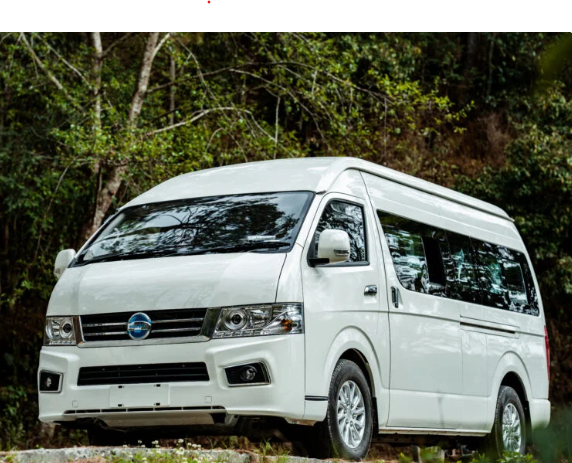
From the front, the NAVECO reads as a tall, upright van with a short nose. Most of what matters sits out of sight: a double wishbone independent front suspension, front disc brakes and electric power steering. Without a combustion engine, the front end does not need the large radiator opening of a diesel van. The dealer does not describe how the battery and motor are cooled, so we will not guess at the grille. The sheet does list a battery heating system, which helps a lithium battery cope with cold mornings and hill-station winters.
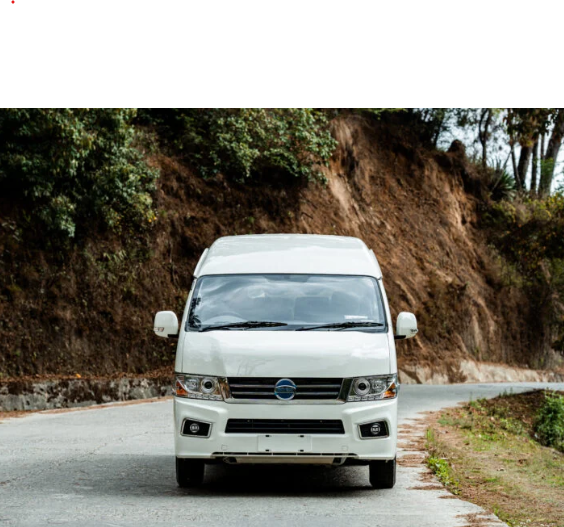
The first seat row holds two seats, going by the 2+4+3+3+4 layout. That normally means the driver and one passenger, but the sheet does not say so outright. Confirm whether the 16 seats include the driver’s. Electric power steering lets the maker tune easy low-speed turns in tight bus parks and a steadier feel at highway speed. The listing does not say how this van is tuned, so judge it on the test drive.
Rear View
The rear is where the work gets done. The sheet lists a leaf spring rear suspension, rear disc brakes and a rear axle labelled “13 Direct Drive”. With a single motor, the layout points to rear-wheel drive, though the dealer does not say so directly.
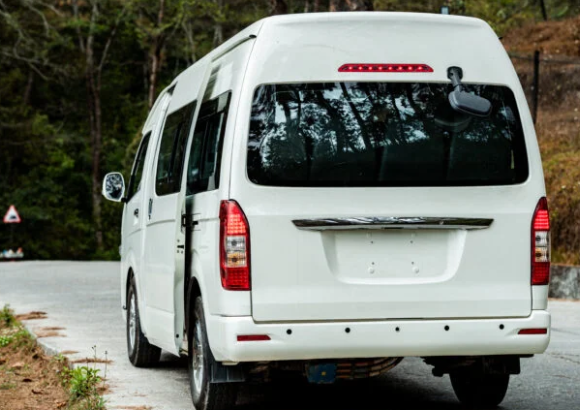
Leaf springs are a heavy-duty choice. They are simple, tough and easy to repair, which suits a van that will often run full. The trade-off is ride quality an empty van can feel firmer than a car. The last row holds four people. The van is 1,880 mm wide on the outside, and the cabin is narrower, so four seats across leave each passenger less than 470 mm. The back row suits slimmer passengers or short trips better than a long-haul journey.
The sheet gives no luggage volume, and with a four-seat rear bench, space behind it is likely to be limited. Operators running airport transfers or tour groups with bags should ask how much cargo fits with all seats in use. The sheet also omits the tail lamps, rear camera and rear door details.
Interior and Technology
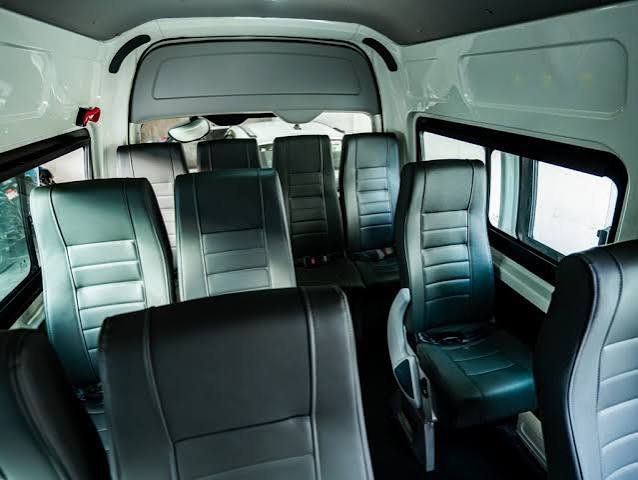
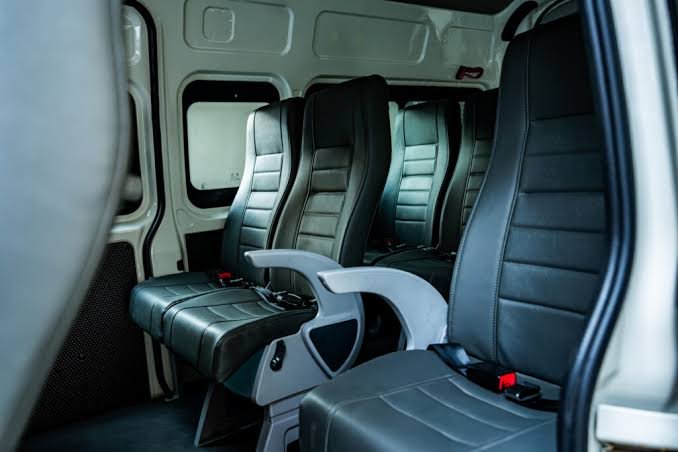
The cabin is built around one number: 16 seats, arranged 2+4+3+3+4 across five rows. The sheet confirms that seat belts are available, but it does not describe the upholstery, seat pitch, headrests or aisle width.
The technology sits mostly under the floor. The permanent magnet synchronous motor (PMSM) delivers 60 kW rated and 120 kW peak power, with 330 Nm of torque available instantly. That is what lets an electric van pull away smoothly with a full load. Energy comes from a 77.28 kWh CATL battery. CATL is one of the world’s largest battery makers, and the lithium iron phosphate chemistry is known for stable behaviour and long cycle life. A battery heating system keeps the pack in its working range when mornings turn cold.
The van charges through a GB/T system. The sheet does not publish charging times, charger power or whether the van takes both AC and DC charging, so ask for these before you plan a route. What the sheet does not list is just as useful. There is no mention of a touchscreen, camera, USB points, air conditioning capacity or a driver display. If these matter to your passengers, ask the dealer to confirm them in writing.
Range
The NAVECO 16-seater offers an impressive driving range of up to 380 km on the NEDC cycle, supported by a 77.28 kWh battery pack. With an estimated energy consumption of around 20.3 kWh per 100 km, it delivers an efficient performance for an electric van in this segment.
Its 380 km claimed range makes it suitable for daily passenger transportation as well as for commercial operators looking for an electric passenger van. The NAVECO 16-seater also features a GB/T charging system and a battery heating system, supporting convenient charging and battery performance management. These features add to its practicality for regular commercial operations.
In the 16-seater electric van segment, the NAVECO stands out with its 77.28 kWh battery and 380 km claimed range. Compared with the Kawei 16-seater, which comes with a 70 kWh battery, the King Long 16-seater with a 75.41 kWh battery, and the RZM R5 with a claimed range of 330 km, the NAVECO offers a competitive combination of battery capacity and driving range.
Overall, the NAVECO 16-seater is a promising option for passenger transportation businesses seeking a spacious electric van with a long claimed driving range and practical battery features.
Ground Clearance
The NAVECO 16-seater has a ground clearance of 200 mm. According to the dealer’s listing, the 14-seat NAVECO sits at 180 mm, so the 16-seater gains 20 mm.
Two hundred millimetres is enough to clear most speed breakers, potholed city lanes and the raised edges of rural roads. It is not an off-road figure, and a rocky track or a deep rut can still scrape the underbody. The underbody matters more in an electric van, because the low-mounted battery is the most expensive part of the vehicle. Ask the dealer what protection the pack has, such as an underbody guard, and what the warranty says about impact damage.
Load changes the picture. With 16 passengers aboard, the rear leaf springs compress and the body settles, so working clearance will be lower than 200 mm. Drivers should take speed breakers slowly when the van is full. The sheet gives no wading depth or water-ingress rating. Waterlogged streets are common in Nepali cities during heavy rain, so get that figure in writing before using the van on flood-prone routes.
Chassis
The vehicle features a chassis that combines a car-like front section with a truck-inspired rear design. It comes equipped with double-wishbone independent suspension at the front and leaf spring suspension at the rear, along with electric power steering and disc brakes on both axles. The independent front suspension helps improve steering response, stability and tyre contact on uneven roads, while the rear leaf spring suspension is designed to handle heavy loads and offers durability with easier maintenance.
It is powered by a single Permanent Magnet Synchronous Motor (PMSM), producing 60 kW of rated power and up to 120 kW of peak power, with a maximum torque of 330 Nm, delivered to the rear wheels through a direct-drive system. The vehicle has a wheelbase of 3,110 mm and is fitted with 215/75R16LT tyres, providing a stable driving experience and better load-handling capability.
Safety and Driver-Assistance Features
The published safety kit is short but covers the basics: disc brakes on both axles, electronic ABS with EBD, a braking force booster and seat belts. Disc brakes at the front and rear resist heat build-up better than drums, which matters on Nepal’s long mountain descents. ABS stops the wheels from locking under hard braking, so the driver can keep steering. EBD shifts braking effort between the axles to suit the load, which helps in a van whose weight swings between empty and a full 16 seats. The sheet says seat belts are available without saying how many. Ask whether all 16 seats, including the four-seat rear row, have belts. For school and tour operators, this is a legal as well as a safety question.
The sheet does not list airbags, electronic stability control, a reversing camera, parking sensors, lane warning or automatic emergency braking. If they are fitted, get them in writing. If not, a reversing camera and sensors are inexpensive to add and cut low-speed accidents at crowded bus stops. The NAVECO gives the driver sound brakes and a stable platform, but it does not show the driver-assistance technology of newer vans.
Launch Price
The official price of the NAVECO IVNV6550EV16W in Nepal is Rs. 80,99,000, as listed by its dealer, HAMs Motors. The price comes with a warranty of 8 years or 4,00,000 km, and the dealer has not said which components it covers.
This puts the van at the top of the 16-seat electric van segment in Nepal. The rivals I found are priced from about Rs 62 lakh (Golden Dragon) to Rs 73.5 lakh (RZM R5). The King Long 16-seater is Rs 72,50,000. HAMs Motors’ own Kawei with a 70 kWh battery matches the NAVECO at Rs 80,99,000.